
Boat Transport Near Me: How to Safely (and Affordably) Move Your Boat by Road
Buying a new boat, relocating your vessel to a pristine new marina, or pulling it out of the water for routine winter maintenance are all milestones to celebrate. However, getting your boat from point A to point B over land might seem a logistical headache, but it is a job that we do all the time and so can help smooth the path for you.
When you type "boat transport near me" into a search engine, you often encounter a confusing mix of general haulage businesses, multi-car transporters, and specialised marine logistics companies, but that’s not what you should be looking for – you want and need a specialist.
Moving a boat is not like moving standard freight. The curved structure of a hull is designed to be supported uniformly by water, meaning that placing it on a flat, unyielding truck bed without tailored marine supports can introduce catastrophic stress fractures. To get your boat moved safely without breaking the bank, you need an operator who understands the unique physics of road-based marine haulage and has the specialised equipment needed for the task.
Perhaps the better question to be asking should be to do with what reputation the transport company has. We, at South West Boat Transport, have a record of amazing reviews, particularly under the new ownership team of Jeremy and Zoe, with customer after customer giving five star reviews.
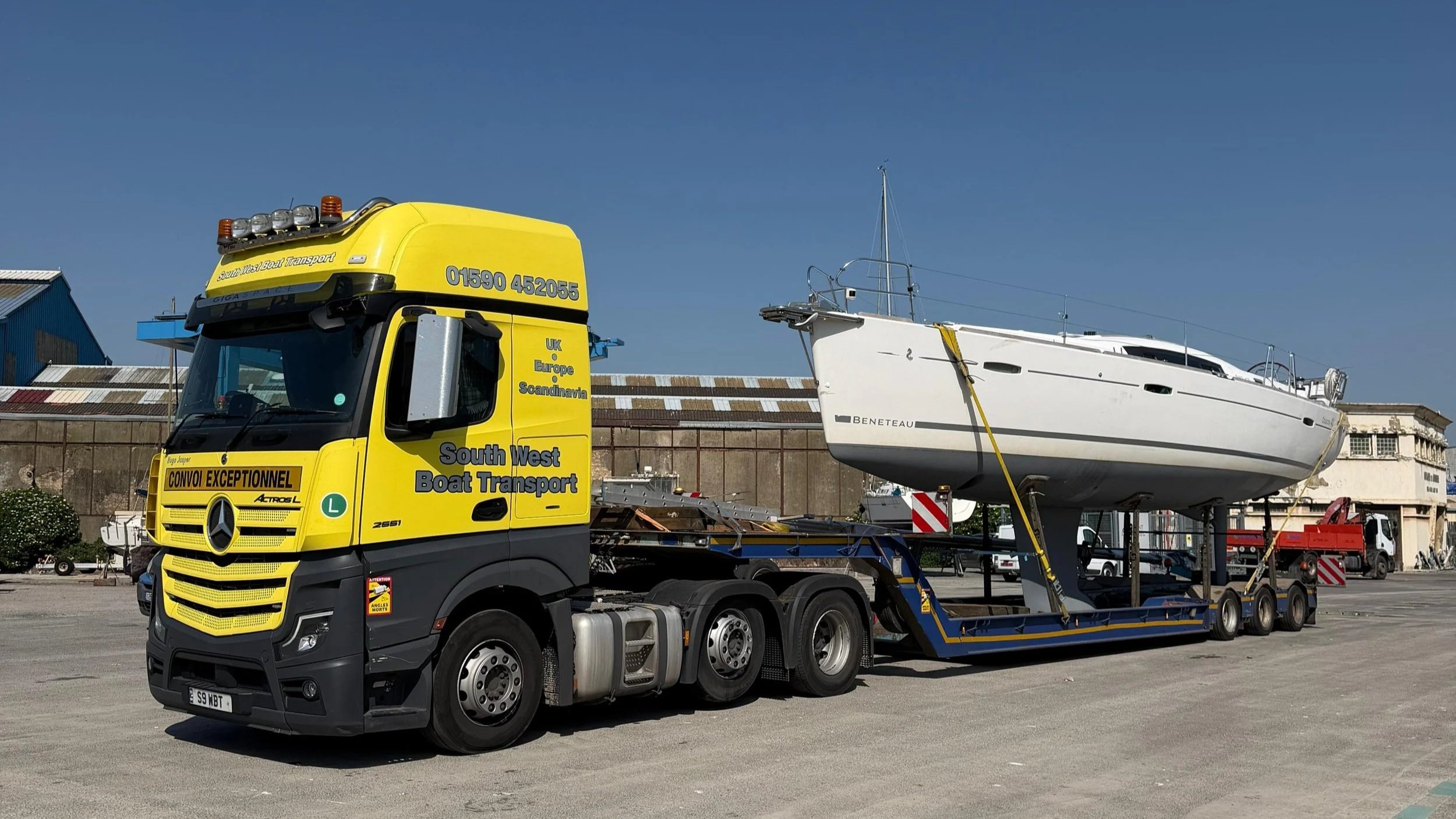
Why "Local" Matters: The Benefits of Regional Marine Haulage
Opting for a local boat transporter over a generic nationwide carrier offers major structural advantages:
Eliminating "Empty Mile" Fees: Transporters calculate quotes based on total drive time, including the journey required to reach your boat. Choosing an agency with a regional hub minimizes dead leg miles, keeping your quote competitive.
Familiarity with Local Marinas: Local drivers already know which regional boatyards have tight access corners, low-hanging branches, or tidal constraints on their slipways, preventing delays on moving day.
Abnormal Load Logistics: In the UK, a vehicle or load with an overall width exceeding 2.9 metres is legally classified as an abnormal load. Local specialists already maintain direct lines of communication with regional police and highway authorities, ensuring route approvals and escort vehicles are organized without bureaucratic delays.
That said, what does “near me” mean? We run a fleet of three trucks with a choice of 5 trailers and they are always out and about across the country or out in Europe – at the time of writing, we have one truck heading home from Greece, another in the north of England and our third heading down towards Cornwall, so where is local to us today?
This means that, if we are able to tie your boat move in with another, we may be able to reduce the “empty mile” charge. The great thing with specialised transport is that we travel to specialised collection and delivery points and so build relationships with the marinas and boatyards across the country and across Europe. We have well established routes to obtaining permits and approvals for transporting wide loads throughout the UK and Europe.
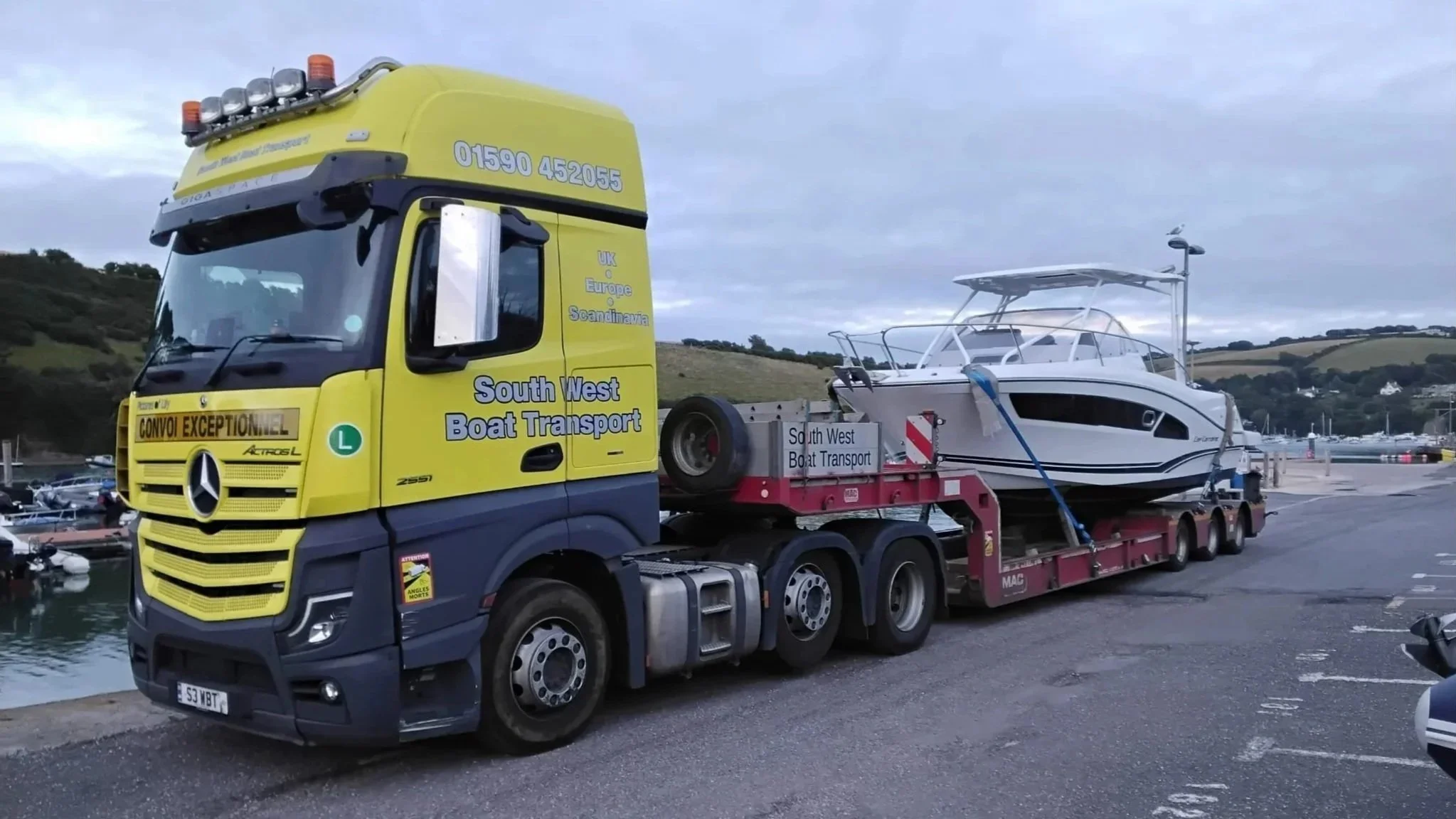
Road vs. Sea: Which Method Fits Your Vessel?
Before booking, determine whether your boat should travel over tarmac or through open water:
Road Haulage (Specialist Marine Trailers)
Best For: Powerboats, RIBs, river cruisers, narrowboats, and sailing yachts up to roughly 50 feet in length.
The Rig: Heavy-duty tractor units pulling custom air-suspension low-loaders or extendable trailers. The air-suspension system is vital because it cushions the hull against the vibration and impact of modern road surfaces.
Sea Delivery (Professional Skipper & Crew)
Best For: Deep-keeled blue-water yachts, heavy multi-hull vessels, or larger motor yachts exceeding standard road weight thresholds (greater than 44 tonnes) or height limits.
The Rig: A qualified commercial crew sails your boat port-to-port. While this avoids road dimension regulations, it subjects your vessel to engine hours and unpredictable maritime weather patterns.
How Much Does Boat Transport Cost in the UK?
Unlike standard transport, there are so many different variables – length, beam transport height are the obvious ones, but other less obvious restraints and therefore costs include embargo times – when a wide load is not permitted to travel on the roads, price of escort vehicles, police escorts and so on. This is why we cannot publish a “price per mile” and so always offer a free, no obligation quotation.
We will always try to plan your boat move to tie in with our next – this reduces our costs, a saving which we will pass on to you. This will sometimes require a little flexibility with dates but can lead to a saving of up to 20%!
If, however, timing is critical to you, we offer a “dedicated trip” price, which allows for you to specify dates, subject to our availability, of course.
Factoring in the Hidden Fees
When calculating your overall moving budget, remember to ask your boatyard and transporter about supplementary costs:
Craneage Fees: Both the origin and destination marinas will charge a fee to sling and hoist your boat via crane or travel-lift onto the trailer.
Mast De-rigging: For sailing yachts, professional boatyards charge to step or un-step the mast before road transit.
Permit Overheads: If your boat's beam is wider than 2.9 metres, ensure the carrier includes the administrative cost of filing abnormal load notifications within the primary quote.
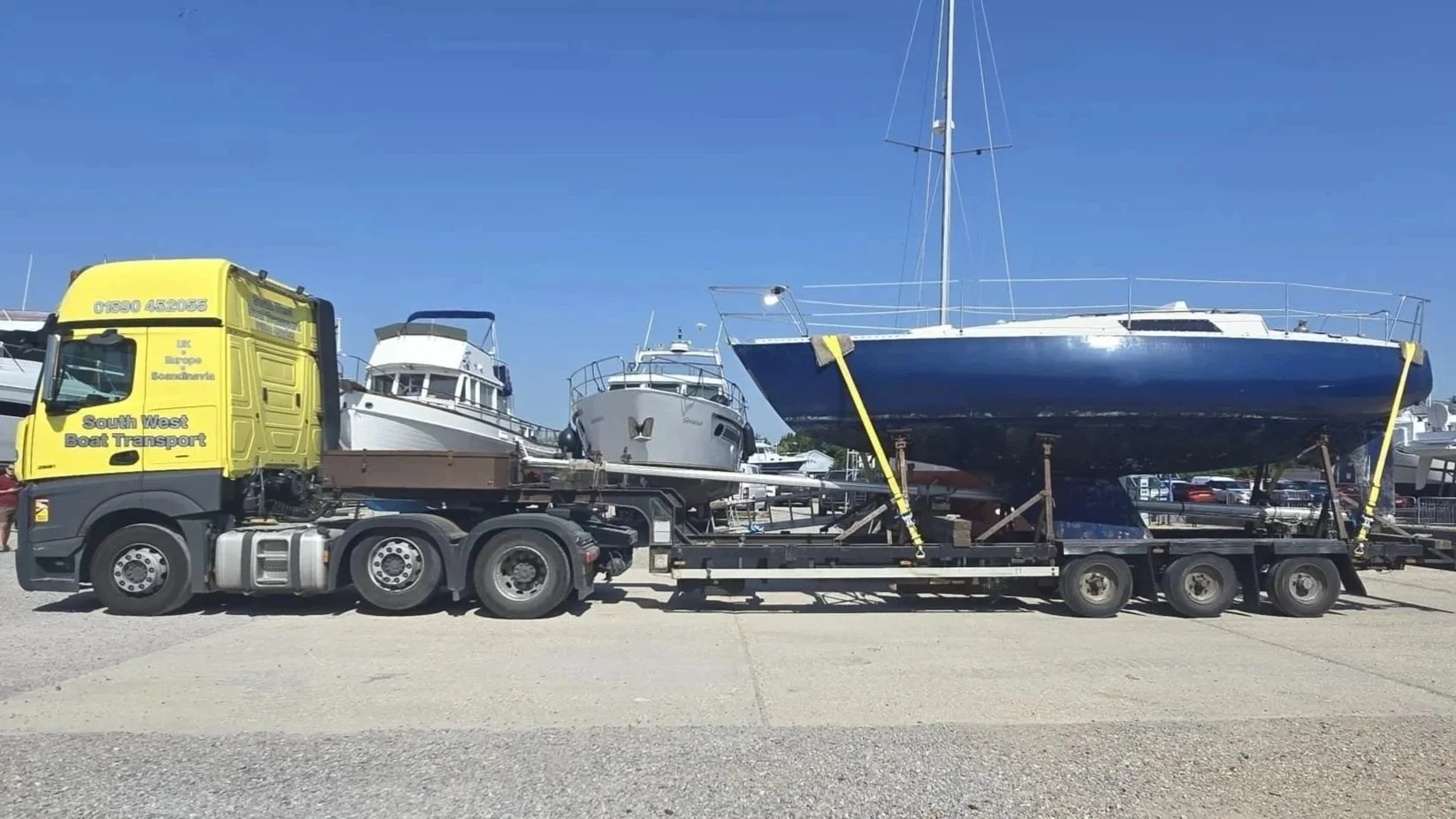
Step-by-Step Checklist: Preparing Your Boat for the Road
To ensure a secure haulage route and prevent insurance claim complications, treat your road preparation as seriously as preparing for a storm at sea.
1. Verify Dimensions Personally: Do not rely blindly on manufacturer manuals.
Measure the absolute maximum length, beam (widest point), and draft yourself. Subsequent modifications like swim platforms, bowsprits, or radar arches add to the total footprint and must be disclosed to ensure the correct trailer allocation.
2. Strip and Lock the Interior: Prevent internal projectile damage.
Remove all loose personal items, valuable electronics, and loose galley cookware. Firmly secure all internal cabin doors, lockers, and structural companionway hatches to stop them slamming violently during highway acceleration.
3. Drain All Onboard Fluid Tanks: Lighten the total weight load.
Completely pump out all greywater, bilge contents, and blackwater holding tanks. Empty your freshwater system entirely and run down your primary fuel reserves to the lowest safe level to minimize shifting weight during transit.
4. Secure Exterior Trim and Canvas: Wind speeds on highways simulate gale-force conditions.
Remove all canvas bimini tops, dodgers, and cockpit covers, as highway-speed winds will tear them apart. Tie down loose cables, remove or lower aerials and radars, and firmly tape down exterior plexiglass hatches. For sailboats, ensure the un-stepped mast is securely padded and lashed to avoid metal-on-metal friction.
We have written a “how to guide”, please click on the button below.
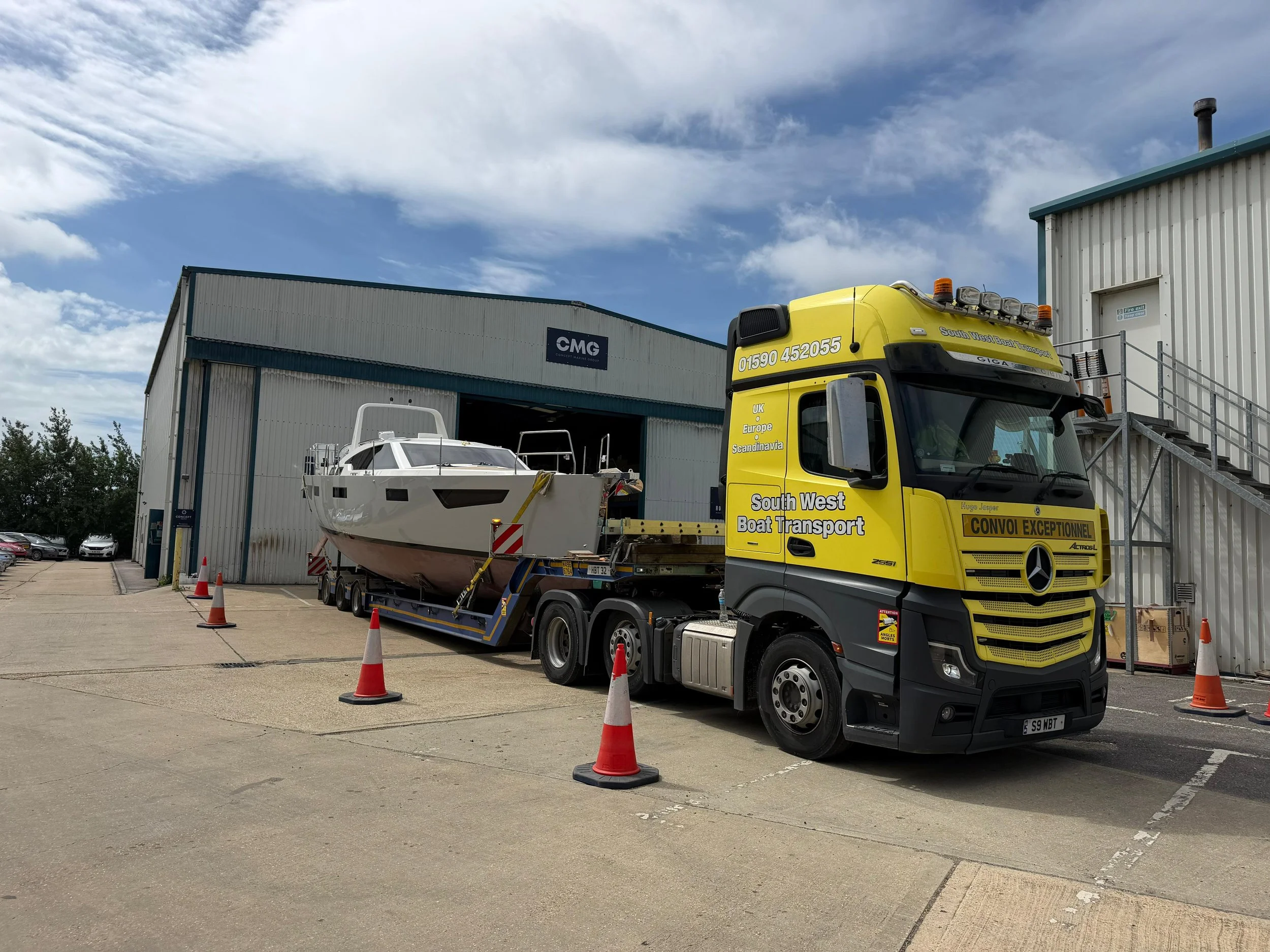
Crucial Questions to Ask an Operator Before Booking
Before signing a contract with a local transport company, protect your investment by asking these direct questions:
"What specific insurance policy covers my vessel during transit?"
Standard road haulage insurance limits (such as standard RHA conditions) pay out based on a set monetary value per tonne of weight, which may not cover the true cost of a premium marine vessel. Verify that your chosen haulier carries dedicated Marine Goods in Transit Insurance that fully matches or exceeds the current market replacement value of your boat.
"Do you handle marina liaison directly?"
Top-tier marine transport companies do not expect you to act as the middleman. They will coordinate directly with the dockmasters at both marinas to ensure the arrival time matches precisely with the crane slot.
Summary
When booking "boat transport near me," looking for the absolute cheapest quote on a generic marketplace can lead to damaged hulls and uninsured accidents. Investing in a dedicated, locally knowledgeable marine haulier with custom trailers ensures your vessel arrives safely at its new home, ready for the water. At South West Boat Transport we cover all elements mentioned in this blog and you can contact us for a direct quote.
For more information please call us in Lymington on 01590 452055 or Plymouth on 01752 687700 or email info@boat-transportation.co.uk.
